Building a sustainable future for AI: Innovation is transforming data center construction
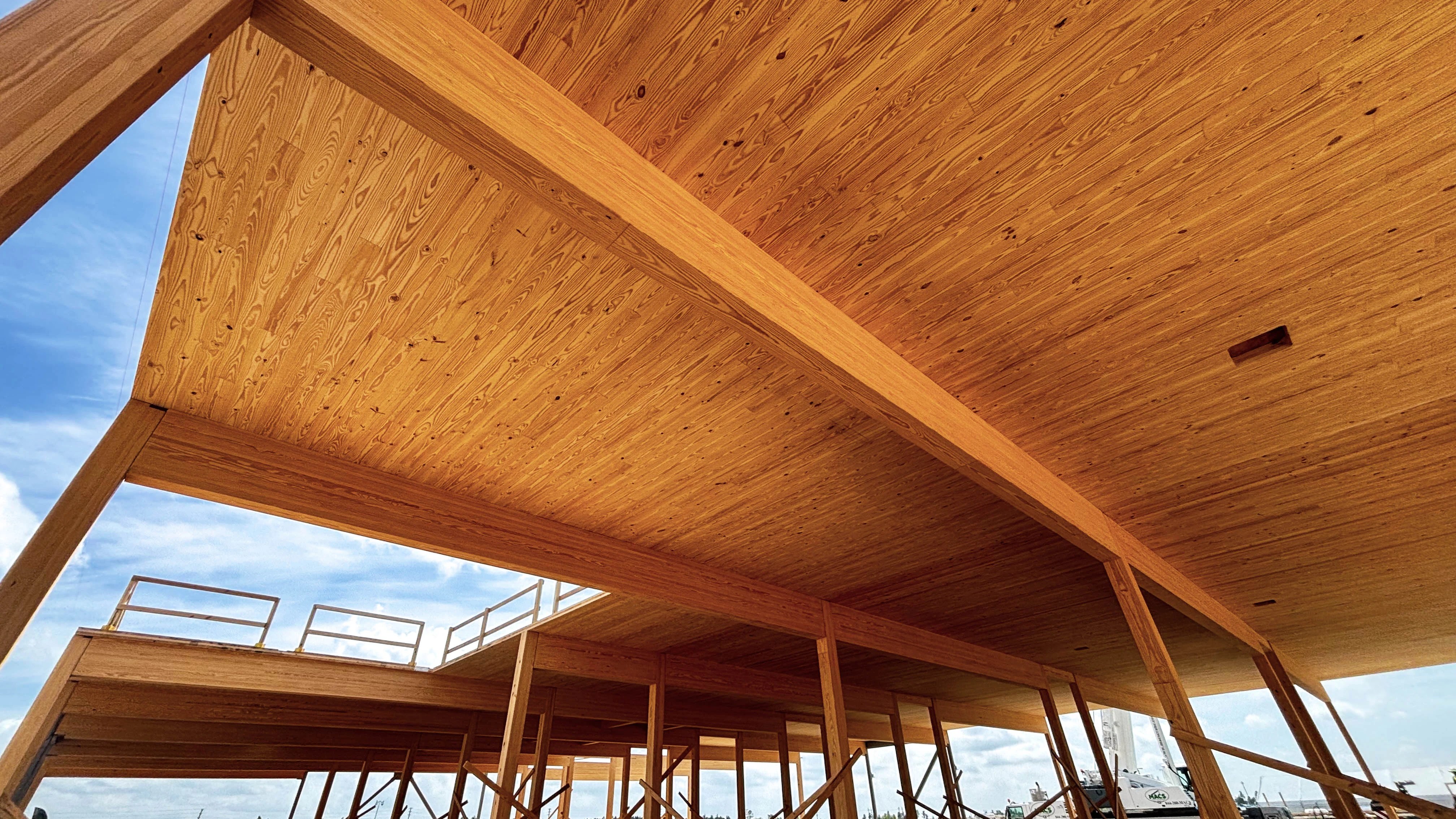
Data centers, the global infrastructure that brings our technologies and programs to life, have traditionally relied on carbon-intensive materials like concrete and steel. But a wave of innovation is reshaping how these critical facilities are built, demonstrating that technological advancement and environmental responsibility aren’t mutually exclusive.
Meta is pioneering two approaches that are emerging as game-changers in sustainable construction: mass timber architecture and low-carbon concrete. They represent more than incremental improvements — they’re fundamentally reimagining what sustainable infrastructure can look like.
The mass timber revolution
Wood might seem an unlikely hero in industrial construction, but engineered mass timber products are proving they can compete with traditional materials on strength while dramatically reducing environmental impact. Mass timber refers to wood-based products like cross-laminated timber and glue-laminated beams that are engineered for industrial applications, offering strength comparable to steel with a fraction of the carbon footprint.
Our pilot projects demonstrate the transformative potential of this approach. By incorporating mass timber into administrative buildings at data center campuses in South Carolina, Wyoming and Alabama, Meta is achieving approximately 41% reduced embodied carbon compared to the conventional construction materials being substituted. These aren’t marginal gains — they represent a fundamental shift in how we think about building materials for large-scale infrastructure.
The benefits extend beyond carbon reduction. Mass timber products are largely pre-fabricated, which accelerates construction timelines by several weeks while eliminating on-site welding emissions. The material’s lightweight nature can reduce foundation concrete requirements by up to 50%, creating a cascading effect of environmental benefits. Despite its organic origins, mass timber demonstrates exceptional fire resistance due to its density and char layer formation, while its strength-to-weight ratio can actually exceed that of steel.
Research suggests that exposed mass timber in workspaces creates biophilic connections to nature, reducing stress and boosting productivity for building occupants. This intersection of sustainability and human wellness represents a holistic approach to innovation that considers both planetary and personal health.
The sustainability of mass timber hinges on responsible sourcing. Meta requires third-party audits to ensure wood is traceable to its forest of origin and that these forests are managed for long-term ecological health and social impact. Climate-smart forestry practices such as wildfire risk reduction, partnerships with tribal landowners, and active conservation efforts ensure that increased demand for timber supports rather than depletes forest ecosystems.
Reimagining concrete
While mass timber offers an alternative to steel, concrete remains essential for data center foundations and infrastructure. Since cement production accounts for approximately 8% of global emissions, addressing concrete’s carbon footprint is critical to achieving meaningful reductions in construction-related emissions.
Substituting traditional cement with proven alternatives like fly ash and slag can reduce carbon intensity by up to 20% below regional baselines. The most effective intervention is often the simplest: using less. By eliminating concrete requirements in electric and telecom duct banks and optimizing designs with gravel fill and reduced slab thickness, carbon footprints can drop by over 30% compared to traditional designs. When concrete is necessary, adjusting the formula makes a significant difference.
These advances are accelerated by artificial intelligence. A Meta AI model that uses adaptive experimentation toolboxes is simultaneously optimizing concrete mixtures for strength, cure time and sustainability. In lab testing, this system achieved 70% emissions reductions while maintaining all necessary performance characteristics. We have also open-sourced our research, making this innovation accessible to manufacturers and builders worldwide, to accelerate industry-wide transformation.
Collaboration as catalyst
Collaboration also breeds innovation. Through partnerships with the iMasons Climate Accord, the Center for Green Market Activation, and the American Concrete Institute’s Center of Excellence for Carbon Neutral Concrete, Meta is working to establish standards, share knowledge and aggregate demand for low-carbon materials.
This collaborative approach addresses a fundamental challenge: Novel technologies need scale to become economically viable, but achieving scale requires coordinated demand. When over 70 companies unite through initiatives like the iMasons Climate Accord to establish standardized carbon measurement methodologies and call for supplier transparency, they create market conditions that make sustainable alternatives competitive.
Building forward
The transformation of data center construction illustrates a broader truth about sustainability and innovation: They’re most powerful when pursued together. Mass timber and low-carbon concrete aren’t just environmentally responsible choices; they offer practical advantages in construction speed, structural performance and long-term viability.
As AI and cloud computing continue expanding, the infrastructure supporting these technologies must evolve. The innovations emerging in data center construction offer a blueprint for sustainable building across sectors. By combining material science, artificial intelligence, responsible forestry and industry collaboration, these approaches demonstrate that meeting growing technological demands doesn’t require compromising environmental commitments.
The data centers being constructed today with mass timber frames and low-carbon concrete aren’t just buildings; they’re proof points for a sustainable future. They demonstrate that with innovation, collaboration and commitment, we can build the infrastructure our digital world requires while protecting the natural world we depend on.
Related
-
Hello, Beaver Dam!
Meta is thrilled to announce that Beaver Dam, Wisconsin, will be home to our next…
-
Hello, El Paso!
El Paso, Texas, will be home to our next state-of-the-art data center — our 25th…
-
Montgomery, we’re growing!
Meta is excited to announce that the Montgomery Data Center campus is expanding with two…